Roobet withdrawals: process, wagering checks and delays
 Available in GB
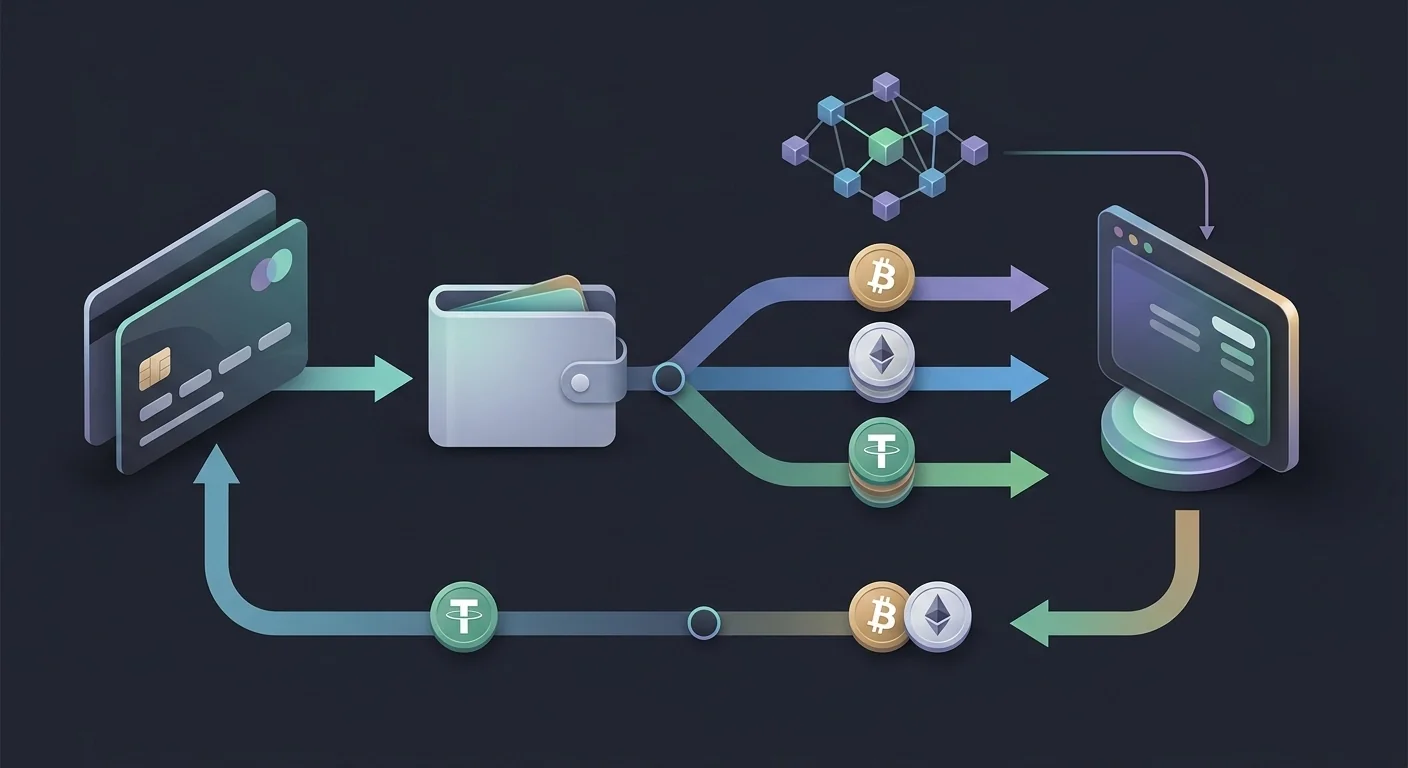
A Roobet withdrawal is not governed by one universal payout-time number. Before funds can leave, deposited money must satisfy Roobet’s 100% deposit turnover rule, account verification can affect access, and the chosen payment network still has to settle the transfer. For crypto, blockchain confirmation can create a delay even after Roobet has sent the transaction.
Exact withdrawal fees, limits and method-level processing times can vary by country, provider and route, so they should be checked in the live cashier rather than copied from a generic table. The useful way to diagnose a slow cash-out is to identify which stage is holding it up.
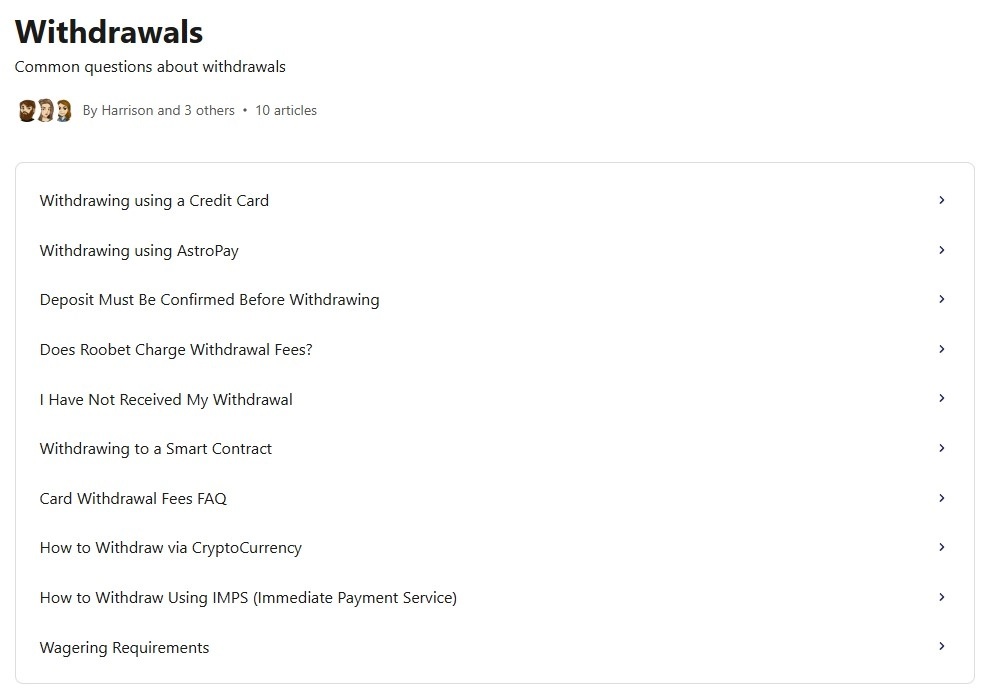
Table of Contents
- Start with the withdrawal gate, not the advertised speed
- The 100% deposit turnover rule is not a bonus wagering rule
- Diagnose a withdrawal by stage
- KYC can interrupt an otherwise valid cash-out
- Crypto withdrawals have two clocks
- Fees and exact timings belong in the live cashier
- Check the destination as carefully as the amount
- A five-point pre-withdrawal checklist
- UK context changes what a reader should compare
- What usually determines whether a Roobet withdrawal is smooth or slow
Start with the withdrawal gate, not the advertised speed
The first question is whether the balance is eligible to leave the account. Roobet’s current AML rule requires 100% of a deposit to be wagered before withdrawal. That applies to deposited funds and should not be confused with a separate promotional wagering condition that may apply to bonus money.
If that turnover is incomplete, comparing blockchain speed or card settlement is premature because the withdrawal has not reached the external payment stage yet. The broader Roobet payment methods explains why funding and cash-out should be planned as one lifecycle.
What can block a cash-out
Check turnover, KYC state, withdrawal method, destination details and any displayed fee before treating a payout as delayed.
The 100% deposit turnover rule is not a bonus wagering rule
Roobet requires the deposited amount to be wagered before withdrawal under its anti-money-laundering rules. If you deposit 100 units of value, the relevant concept is that the deposit must be turned over before the funds can be withdrawn. This rule exists even when you have not opted into a promotion.
A bonus condition is different. Promotional terms can create their own wagering requirement attached to bonus credit or winnings. Combining the two ideas produces confusion because a player may believe “no bonus” means “no wagering before withdrawal”. At Roobet, the deposit turnover rule is a separate account-funding condition.
The practical lesson is simple: do not deposit an amount merely to test a payment rail if you expect to send most of it straight back out untouched. The cashier is not designed as a pass-through transfer service.
Diagnose a withdrawal by stage
| Stage | What can stop or slow it | What to check |
|---|---|---|
| Account eligibility | Deposit turnover not completed or account restriction. | Wagering requirement and account notifications. |
| Verification | KYC request or incomplete verification. | Verification status and any requested action. |
| Method selection | Chosen route not available for withdrawal or different details required. | Live withdrawal cashier, not the deposit screen. |
| Operator processing | Payment checks or reservation of the withdrawal amount. | Status shown by Roobet and transaction history. |
| External settlement | Blockchain or payment-provider processing after the transfer leaves Roobet. | Transaction ID, network confirmation or provider status. |
KYC can interrupt an otherwise valid cash-out
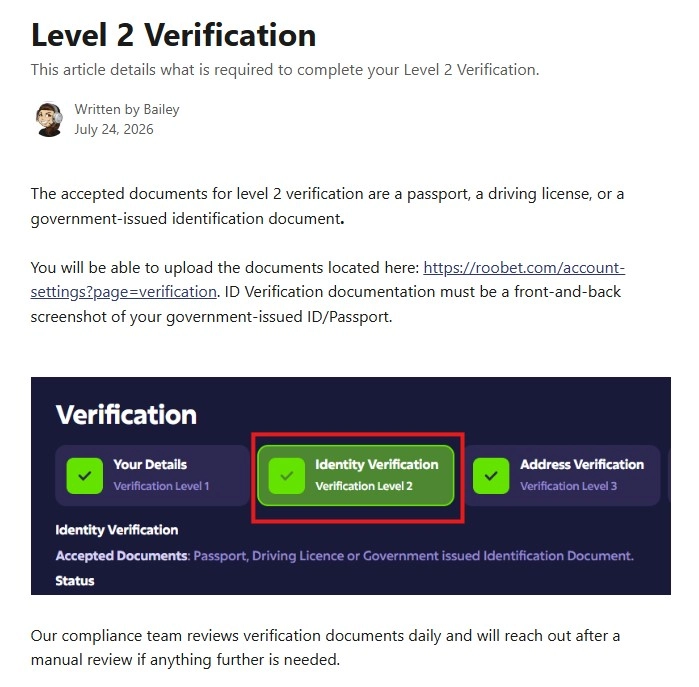
Roobet may request identity verification and can restrict deposit or withdrawal functionality until verification is complete. That means a player can satisfy the turnover rule and still face an account-level gate before money moves.
Do not wait until a large cash-out to discover whether the account is asking for verification. Check the account area first and respond to genuine requests through the official interface. The Roobet KYC covers the verification process and keeps exact document timing separate from what can actually be confirmed.
This is also why a single “average payout time” is misleading. Two users choosing the same payment route can have different withdrawal journeys if one account is already verified and the other is under review.
Pre-withdrawal check
Resolve visible verification requests before judging payment-network speed.
Crypto withdrawals have two clocks
With crypto, it is useful to separate casino-side handling from blockchain settlement. Roobet’s current withdrawal guidance says it sends crypto withdrawals and provides a transaction ID that can be tracked on the relevant block explorer. The eventual arrival still depends on network confirmation and the receiving wallet’s requirements.
That creates two different clocks. The first ends when Roobet has created and sent the transaction. The second ends when the external network and wallet recognise enough confirmation for the funds to appear as usable. A slow second stage does not automatically mean the casino is still holding the withdrawal.
Network congestion can extend this settlement period, and it is not something the casino can simply override after the transaction is broadcast. The Roobet crypto payments explains the wallet and network side in more depth.
Fees and exact timings belong in the live cashier
Roobet’s current fee guidance says withdrawal fees can vary by payment method, issuing bank, card provider and region, and that any applicable fee is shown before confirmation. That is exactly why a static article should not present one permanent fee schedule.
The same logic applies to method-level timing and limits. A global help article for one payment rail can be accurate for that rail and still be irrelevant to your location or account. Check the withdrawal screen that is actually available to you, then review the displayed amount, fee and destination details before confirming.
Withdrawal timing should be diagnosed by stage: inside the account, inside Roobet’s processing flow, or outside Roobet on the payment network.
Better question
Instead of asking “How fast is Roobet?”, ask “Which stage is my withdrawal currently in?”
Check the destination as carefully as the amount
A withdrawal can fail or become difficult to recover if destination details are wrong. For crypto, that means confirming the asset, address and compatible network before sending. For a fiat method, it means verifying the bank, card or provider details shown in the cashier and following any account-name or regional requirements presented there.
Never copy a wallet address from an old message or unrelated transaction without rechecking it. The safest process is to obtain the current receiving address from the wallet you control, compare the beginning and end of the address after pasting, and make sure the asset and network correspond to the balance you are withdrawing.
Roobet’s crypto documentation also uses transaction IDs for tracking. Once a crypto withdrawal has been sent, that identifier is more informative than repeatedly refreshing the casino balance because it lets you inspect the external settlement stage directly.
A five-point pre-withdrawal checklist
- Turnover: Confirm the deposited amount has satisfied the 100% deposit wagering requirement.
- KYC: Check whether the account has an open verification request or restriction.
- Method: Use a withdrawal route actually displayed for the account.
- Destination: Recheck wallet, bank, card or provider details before submission.
- Displayed cost: Review any fee shown by the cashier before you confirm.
If all five are clear, you have removed most of the avoidable causes of a failed or confusing cash-out. What remains is primarily the operator/payment processing path and, for crypto, external network settlement.
Keep evidence
For a problem withdrawal, keep the transaction status and transaction ID where available. Those details are more useful than an unsupported estimate of how long the payout “should” take.
UK context changes what a reader should compare
A withdrawal page should not imply that the existence of a global Roobet method means that method is available to a UK account. Availability varies by location, and Roobet’s broader regulatory position should be assessed separately from its product documentation.
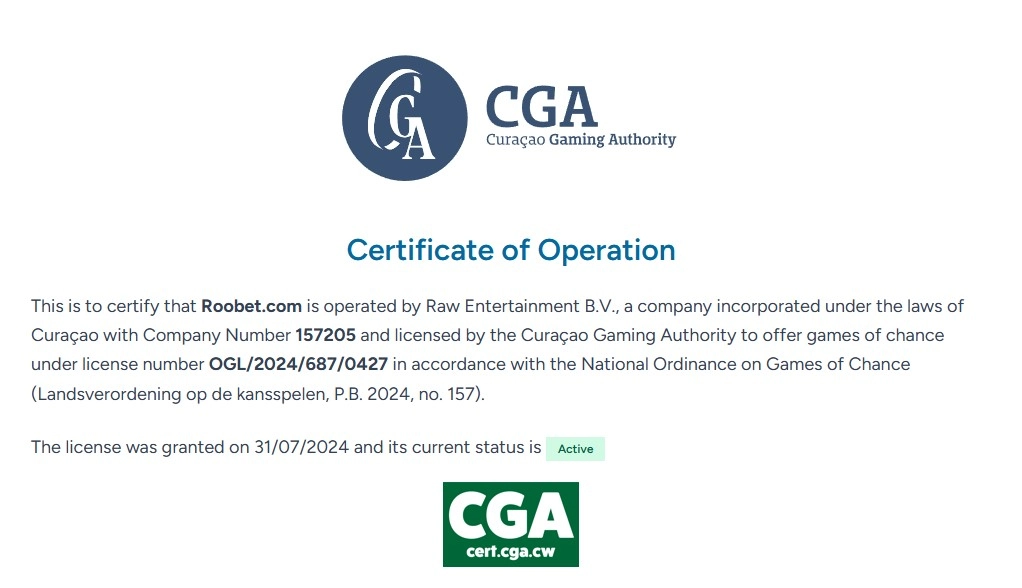
For a UK reader, the comparison standard is often a locally licensed operator where payment rules, consumer protections and complaint routes sit inside the Great Britain regulatory framework. Roobet should be evaluated on its actual licence and account context rather than assumed to offer the same protection because a cashier route works technically.
The Roobet safety covers the trust and protection questions that sit outside pure payment mechanics, while the Roobet UK review brings payments, regulation, games and account access together.
What usually determines whether a Roobet withdrawal is smooth or slow
One practical advantage of this stage-by-stage view is that it tells you what evidence to keep. If the account is still showing a verification or turnover restriction, record that status. If a crypto transfer has already been sent, use the transaction ID to follow the network stage. If the cashier displays a fee or method limitation before confirmation, review it there rather than relying on an old general estimate.
That record also makes any support conversation more precise because you can describe the stage that is actually unresolved instead of asking for a generic payout estimate.
The smoothest withdrawals are the ones prepared before the cash-out button is pressed. Deposit turnover is complete, the account has no unresolved KYC request, the withdrawal route is actually available, the destination details are correct, and any displayed fee is understood.
After that, separate Roobet’s side from the external settlement side. A crypto transaction that has already been sent can still wait on blockchain confirmation; a fiat route can depend on the provider or bank. That stage-by-stage view is more accurate than any single permanent payout-time claim and gives you a clear place to investigate when a withdrawal feels slow.
Created by the ”Roobet Casino” editorial team.