Roobet crypto payments: coins, wallet flow and GBP considerations
 Available in GB
Roobet is clearly crypto-focused. Its current help material lists Bitcoin, Ethereum, Litecoin, Tether, USD Coin, XRP, Tron, Dogecoin, Solana, SUI and BNB for crypto deposits, while fiat routes also exist in supported locations. For a GBP-based reader, the important question is not simply whether Roobet accepts crypto, but how many conversion and network steps sit between pounds in a bank account and money that can eventually return to you.
Crypto deposits also sit under Roobet’s 100% deposit turnover rule before withdrawal. Network selection, wallet-address accuracy, blockchain confirmations and the value movement of the chosen asset can all matter independently of the casino itself.
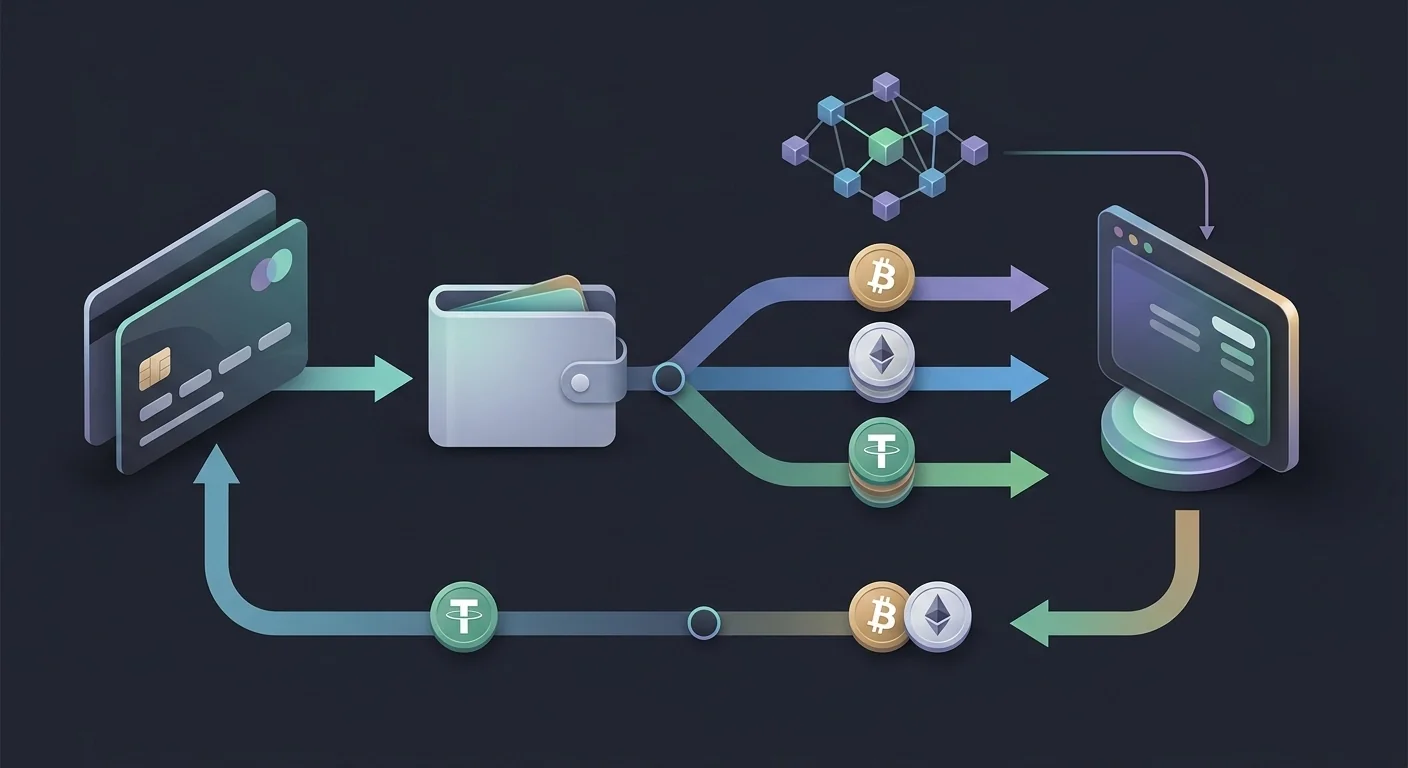
Table of Contents
- What Roobet currently accepts as crypto
- The GBP to Roobet journey has more than one exchange point
- A practical flow from pounds to crypto and back
- Network choice matters as much as the coin name
- Stablecoin or volatile asset: the decision is about exposure, not hype
- The 100% turnover rule changes the purpose of a crypto deposit
- Crypto fits Roobet’s wider product identity
- A five-check crypto payment routine
- UK readers still need to separate payment mechanics from account suitability
- When Roobet’s crypto-first model is a feature rather than friction
What Roobet currently accepts as crypto
Roobet’s current official deposit guidance lists BTC, ETH, LTC, USDT, USDC, XRP, TRX, DOGE, SOL, SUI and BNB. The practical benefit is choice: a user is not locked to Bitcoin alone, and stablecoins such as USDT and USDC provide an alternative to using a more volatile asset for the casino balance journey.
That list is global product information, not a promise that every funding route around it is available to every location. Roobet also supports fiat and card, bank or e-wallet rails in supported locations, with exact options varying by location. The broader Roobet payment methods separates those routes from crypto-specific considerations.
Supported assets in context
Roobet is crypto-native enough that wallet and network literacy matter. The coin list is only the first decision.
The GBP to Roobet journey has more than one exchange point
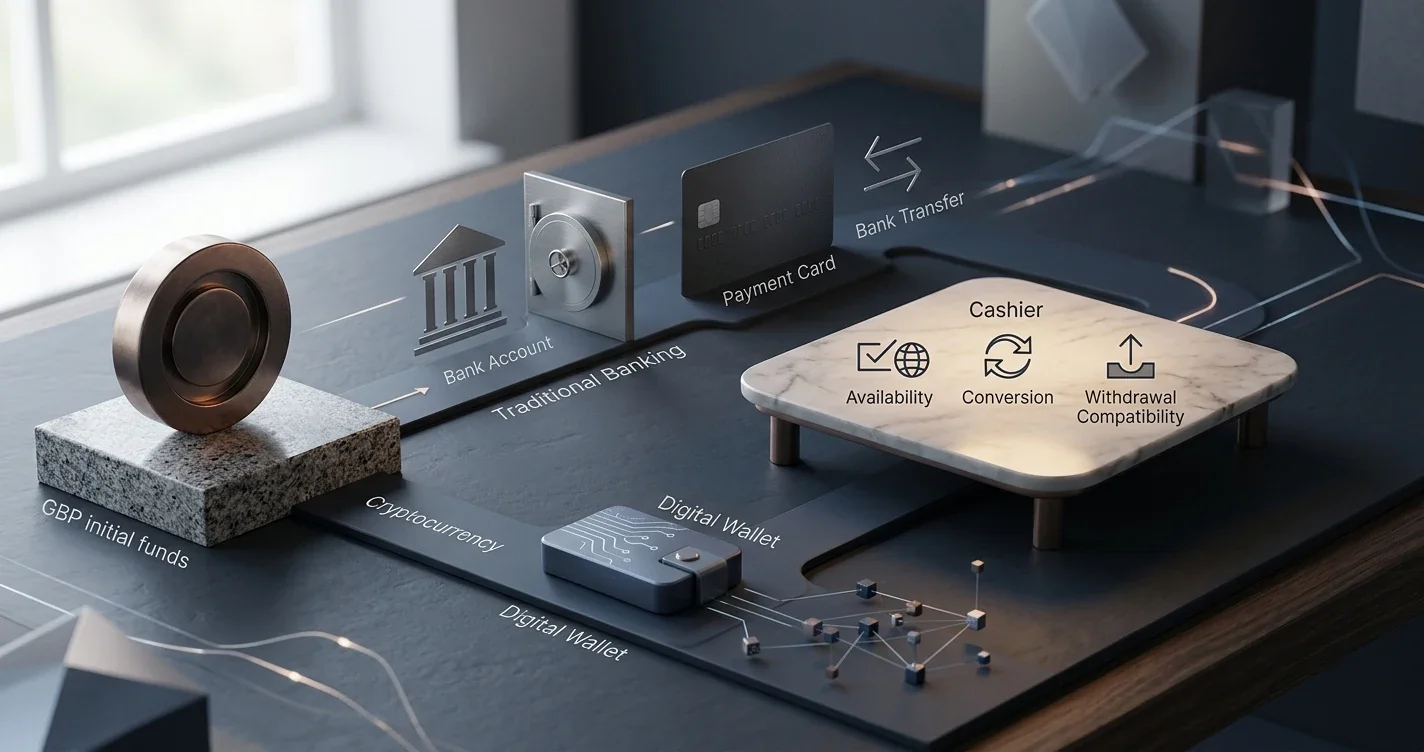
A UK reader who starts with pounds may face a chain that looks like GBP to exchange or on-ramp, then crypto to an external wallet or directly to a casino deposit address, then a Roobet balance, followed by the reverse process when withdrawing. Each extra step can introduce a spread, fee, delay or price movement even when Roobet itself does not set that cost.
This is why comparing only the casino’s displayed deposit fee is incomplete. If you buy a volatile coin with GBP, its market value can move between purchase, play and withdrawal. If you use a stablecoin, price volatility against the US dollar is usually a smaller part of the decision, but GBP to USD-linked conversion still exists and network choice remains important.
No specific exchange or wallet is required for this analysis. The useful comparison is structural: count the number of conversions, transfers and networks you need, then decide whether the crypto-first route is simpler or more cumbersome than the fiat options actually shown to your account.
A practical flow from pounds to crypto and back
| Stage | Decision | Main risk to check |
|---|---|---|
| 1. Buy crypto | Choose asset and purchase route. | GBP conversion cost, spread and asset volatility. |
| 2. Prepare transfer | Match the coin and supported network. | Wrong network or token can prevent crediting. |
| 3. Send to Roobet | Use the current deposit address shown in the cashier. | Address accuracy and required blockchain confirmations. |
| 4. Use the balance | Remember the deposit turnover rule. | Deposited value must satisfy 100% turnover before withdrawal. |
| 5. Withdraw | Choose the correct asset, network and receiving address. | Network fee, confirmation and receiving-wallet requirements. |
| 6. Return to GBP | Sell or convert only if that is your intended end state. | Another spread, fee and exchange-rate movement. |
Network choice matters as much as the coin name
Seeing USDT or USDC on both sides of a transfer does not automatically mean any network is compatible. Roobet’s current help material identifies supported networks by asset, and its Binance guidance explicitly warns that sending through an unsupported network can result in funds not being credited. Always use the network shown in the current Roobet cashier or official help instructions for that asset.
The same discipline applies to the destination address. Copy it from the live receiving wallet, compare the beginning and end after pasting, and confirm that the asset and network match before sending. Crypto transfers are not like card payments where a merchant can simply reverse a mistyped destination.
For withdrawals, Roobet provides a transaction ID after the transfer is sent. The Roobet withdrawals explains why blockchain settlement can continue after the casino-side action is complete.
Do not rely on memory
Supported networks can differ by asset and can change. Re-read the live deposit or withdrawal screen for every transfer.
Stablecoin or volatile asset: the decision is about exposure, not hype
Bitcoin and Ethereum can change materially in GBP value while funds move through the deposit, play and withdrawal cycle. That may be acceptable to someone who already holds those assets, but it creates an extra variable for a player whose mental budget is in pounds. A casino result and a crypto price movement can affect the final GBP value at the same time.
USDT and USDC are designed around a US-dollar reference rather than the price behaviour of Bitcoin or Ether. They can therefore reduce one source of volatility in the payment journey, but they are not the same as holding GBP. You still need to consider the GBP conversion rate, the network used, the wallet provider and any external costs.
Neither route is universally cheaper or faster; compare the costs and timing visible for your own funding path when you use it.
The 100% turnover rule changes the purpose of a crypto deposit
Roobet’s current AML guidance requires 100% of both crypto and cash deposits to be wagered before withdrawal. This is not a promotional wagering condition. It means a crypto deposit is not designed to function as a temporary wallet transfer that you can immediately send back out untouched.
If you are testing whether an address or network works, depositing more than you intend to play with can create an avoidable problem because the deposited amount must meet that turnover condition first. The rule should be understood before funding, not discovered only when you reach the cash-out screen.
Planning implication
Deposit an amount chosen for play, not an amount chosen merely to move money through the account.
Crypto fits Roobet’s wider product identity
Roobet’s product is not crypto-only, but crypto sits close to the centre of its identity. The cashier supports a broad digital-asset range, and the site also has its own quick, repeatable house games such as Crash, Roulette, Mines, Dice and Towers. That combination helps explain why the product often feels designed for users already comfortable with wallet balances and fast online transactions.
House games and payment methods should be assessed separately; crypto support does not establish game quality or safety. Crypto support is a convenience feature, not evidence that the games themselves offer better odds or that account access is suitable for a particular jurisdiction. Payment mechanics should remain separate from game choice; Roobet Originals are assessed on their own mechanics.
A five-check crypto payment routine
- Asset: Confirm the exact coin or token you intend to send.
- Network: Use only a network Roobet currently supports for that asset.
- Address: Copy the live destination and recheck it after pasting.
- Budget: Account for conversion, possible network cost and the 100% deposit turnover rule.
- Exit path: Know where a withdrawal will go and whether you ultimately need to convert back to GBP.
This routine is deliberately simple. It avoids pretending that one coin, exchange or chain is always best and focuses on mistakes that can actually change the payment outcome.
UK readers still need to separate payment mechanics from account suitability
The existence of a crypto rail does not answer whether an operator has the same regulatory standing or consumer protections as a Great Britain licensed gambling business. A wallet can technically send value across borders while the legal and account-access questions remain separate.
Do not use crypto to bypass a location restriction, payment restriction or account rule. If you are evaluating Roobet from the UK, read the Roobet safety separately from the mechanics described here, and use the Roobet UK review for the wider product context.
When Roobet’s crypto-first model is a feature rather than friction
For a GBP-based reader, the deciding factor is often the number of extra steps between money you already hold and the balance you actually want to use. Wallet setup, asset choice, network selection and later conversion back to GBP all add decisions. The crypto route is most coherent when those steps are already familiar, not when a long coin list forces you to learn them just to make a deposit.
Roobet’s crypto setup is most useful for someone who already understands wallets, supported networks, address checks and the difference between a volatile coin and a stablecoin. In that case, the broad asset list gives genuine flexibility and the payment flow can feel native rather than unusual.
It becomes friction when a GBP user has to create several new accounts, buy an unfamiliar asset, make multiple conversions and learn network mechanics simply to fund a casino balance. Before depositing, count those steps and the costs around them. If the crypto route still feels clearer than the available fiat alternative, it is a meaningful feature. If not, the size of the supported coin list does not make the journey simpler.
Published by the Roobet Casino team.